
The best pole clothes for pole dancing lessons come down to one simple rule: bare skin grips the pole, fabric does not. That means shorts rather than leggings, a fitted top rather than anything baggy, and bare feet for most beginner classes. Get those basics right and everything else – heels, grip aids, accessories – can wait until you have found your feet (literally).
Whether you are 19 and trying pole for the first time on a dare from your mates, or 55 and using it as your new favourite way to get fit, the kit you need for a beginner pole outfit is exactly the same. Pole does not care how old you are or who you are dancing for – it cares whether your thighs can actually grip the pole.
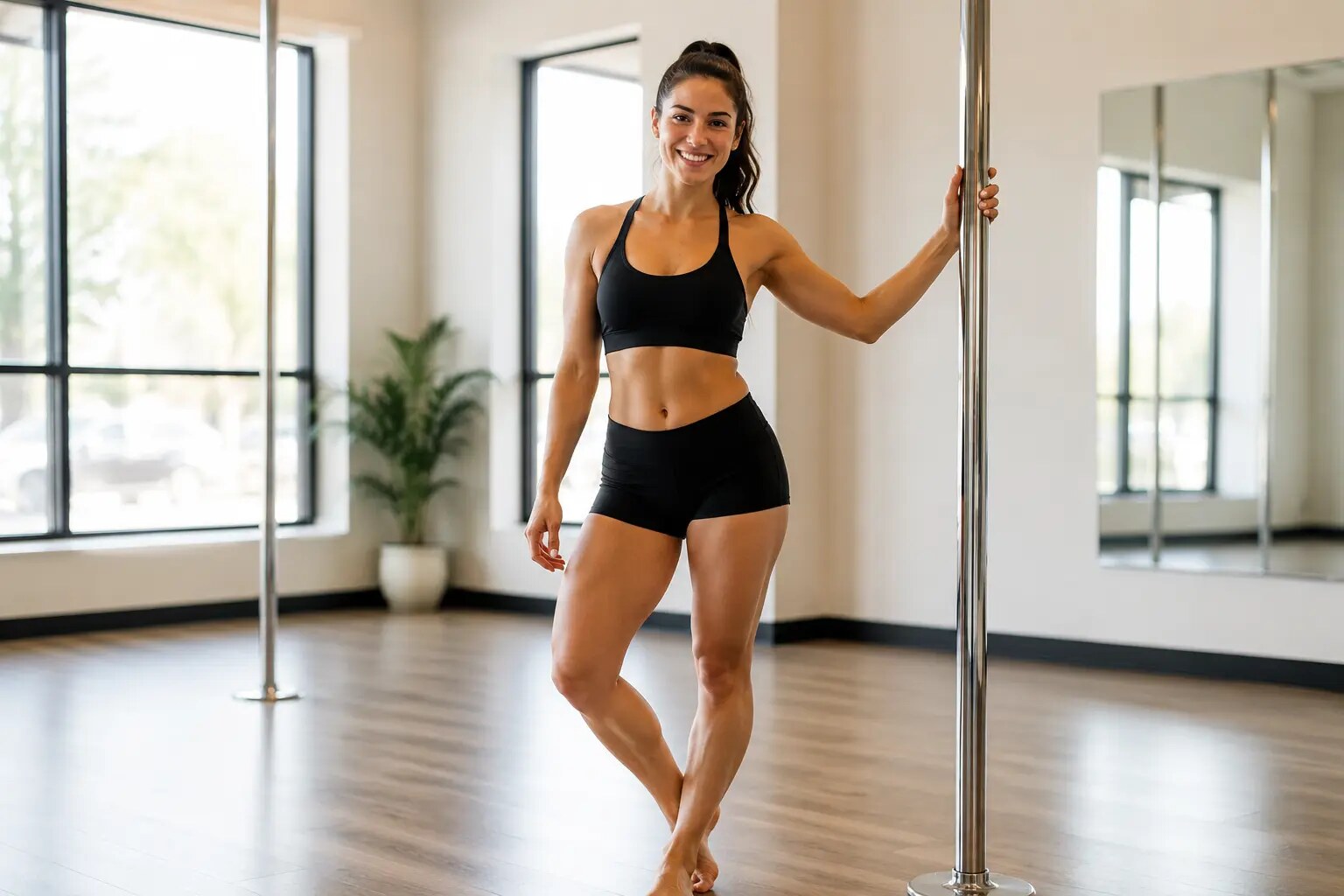
At our studio, we’ve watched hundreds of beginners arrive for their first class in leggings. Almost all of them switch to shorts by their second lesson, because the extra skin contact makes even basic seated holds and spins noticeably easier – it’s usually one of the fastest lessons a new pole student learns, often within a single class.
Why Shorts Beat Leggings Every Time
This trips up almost every beginner. Leggings and joggers feel like the “safe” choice for a first class, but they are actually the opposite – the fabric slides straight off the pole, which makes basic holds far harder and far more tiring than they need to be.
Shorts that sit above mid-thigh let your skin do the work. You do not need anything fancy for your first session – a pair of gym shorts from your drawer is fine. As you progress into spins, climbs and inverts, you will likely want something shorter and more secure. If you are self-conscious about wearing shorts, remember that almost everyone in a beginner class feels the same way. Pole studios are incredibly supportive environments, and practical clothing quickly becomes more important than appearance once class gets going.
Best Pole Shorts for Beginners
A plain pair of gym shorts is genuinely fine for your first lesson or two. Once you know pole is something you’ll stick with, most instructors point beginners toward a handful of specialist pole wear brands that are built specifically to stay put through inverts, floorwork and repeated washing:
- Dragonfly – a favourite with instructors and competition dancers. Styles range from high-waist to scrunch-bum cuts, made from 4-way stretch lycra, mesh, velvet or lace, produced sustainably in the EU. Expect to pay around $58-$78 a pair. A solid, durable choice for your first proper pair of pole shorts.
- Creatures of XIX (CXIX) – best known for “Gecko Grip”, a stickier fabric designed specifically for dancers who struggle with sweaty or slippery skin. Basic Off-Duty shorts start from around $39, with the sticky Gecko Grip styles costing more. If grip is your main worry rather than budget, this is the brand to try first, and they stock men’s pole shorts too.
- Lunalae – an Australian brand offering breathable, odour-resistant, high-stretch shorts from roughly $55-70 AUD (about £28-£37). A good mid-range option if you want more colours and styles without paying premium prices.
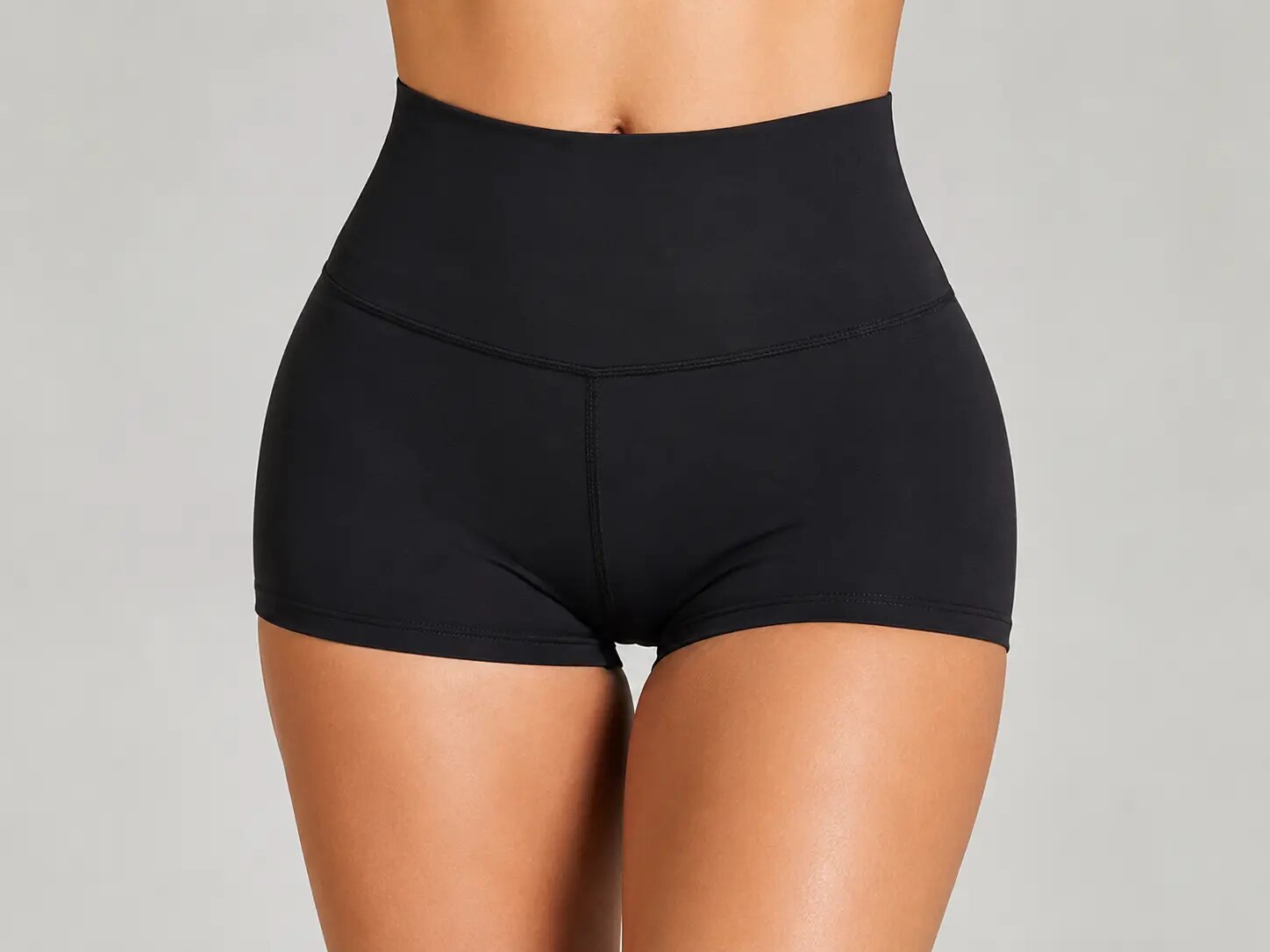
You don’t need to buy any of these for lesson one, but if pole becomes a regular hobby, these three are consistently recommended by instructors for the combination of stretch, coverage and durability – both women’s pole shorts and, in the case of Dragonfly and Creatures of XIX, men’s pole shorts.
What Top Should You Wear?
A sports bra or a fitted crop top works best. Anything loose can ride up mid-move, catch on the pole, or block your instructor’s view of your technique – which makes it harder for them to correct you.
Popular choices include supportive racerback sports bras (the wider back straps stay in place during shoulder mounts and back hooks), fitted racerback crop tops, and high-neck or halter crops if you want a bit more coverage without extra loose fabric. All three work well for the same reason: they sit close to the body and won’t catch on the pole.
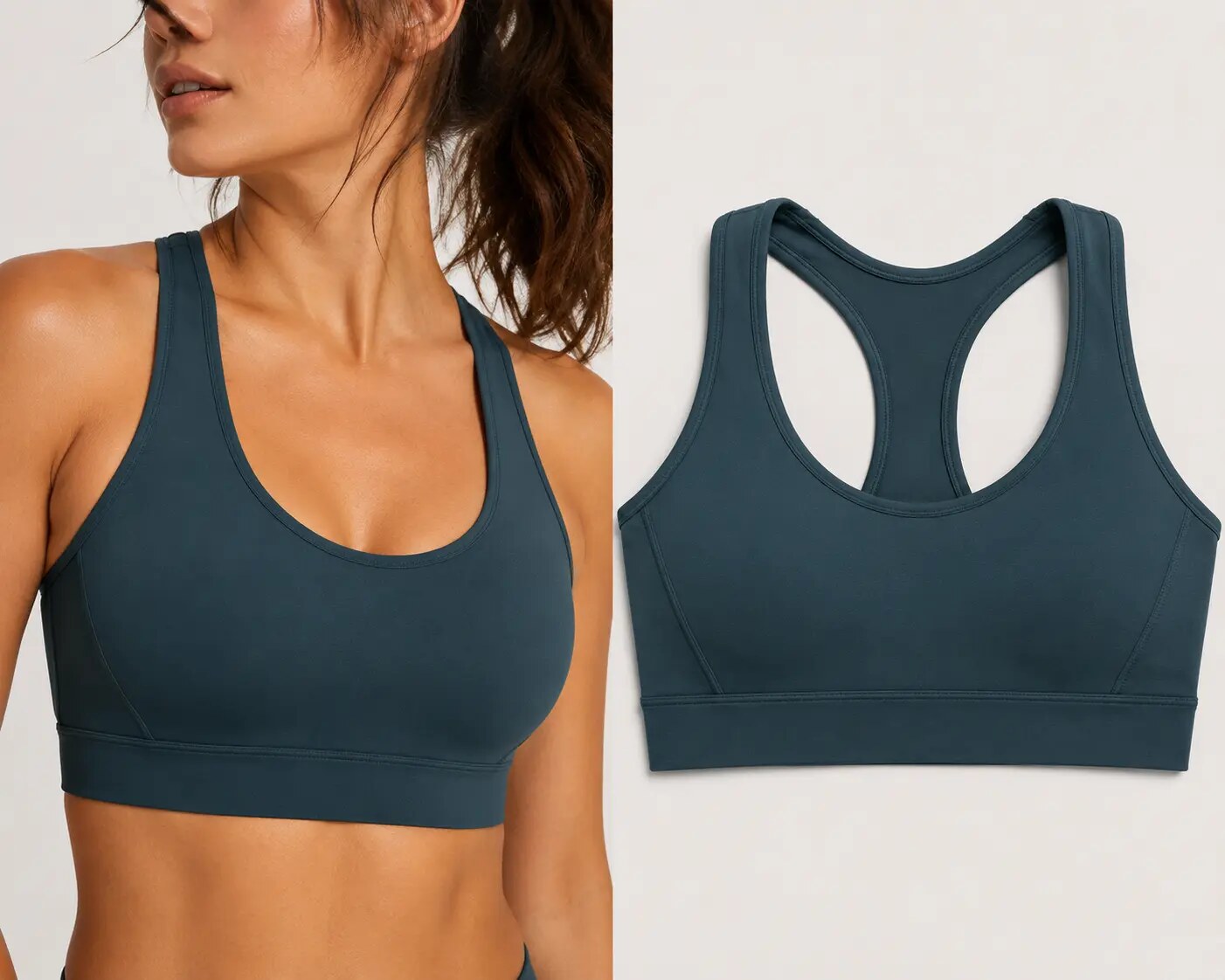
If you would rather have more coverage, a snug-fitting vest top is a good option. Just steer clear of zips, buckles or hardware that could scratch the pole or dig into your skin.
Best Fabrics for Pole Dancing Clothes
Look for nylon, polyester and elastane (spandex) blends with plenty of stretch – most dedicated pole shorts and tops use exactly this combination because it moves with you, holds its shape and survives repeated washing. Avoid thick cotton shorts, which become heavy and lose grip once they’re damp with sweat, and avoid slippery synthetic fabrics that can shift out of position mid-move. If you’re building a beginner pole outfit from your existing wardrobe rather than a specialist pole wear brand, a basic 4-way stretch gym short or bike short is the closest equivalent.
Do You Need Special Shoes for Your First Lesson?
No. Beginner pole classes are almost always taught barefoot, and bare feet actually help – they grip the mat and let you feel your weight properly as you shift between positions. Some pole fitness (non-dance) sessions allow trainers instead – our guide to the best sneakers for pole dancing covers what to look for if your studio permits them.
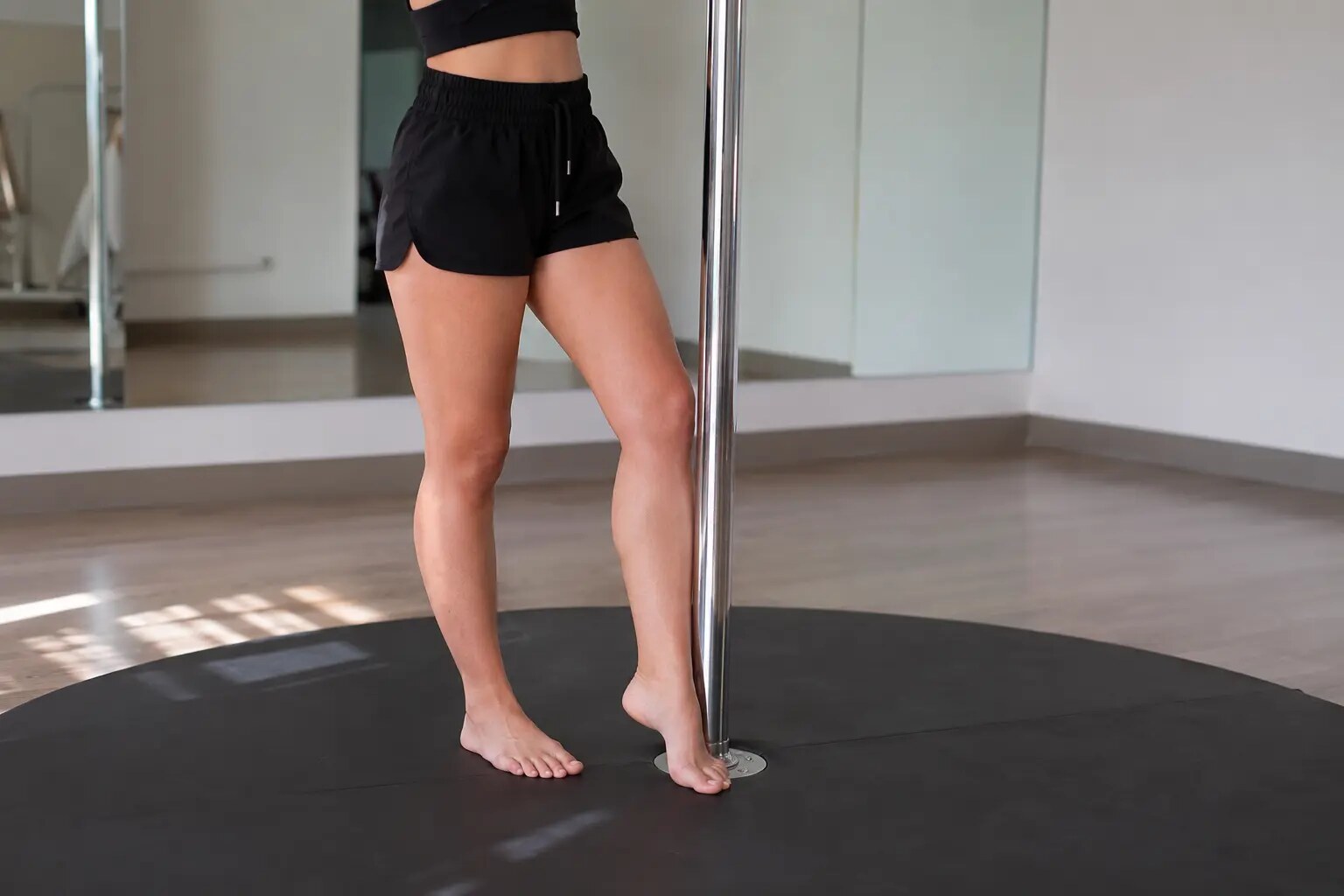
Pole heels are a later purchase, not a first-class one. Once you are confident with the fundamentals, heels open up a different style of movement, but they are not required and most beginner classes will not use them at all. When you are ready to explore that side of things, our guide to the best pole dancing shoes for beginners breaks down what to look for, and our guide to choosing the right heel height explains how to pick your first pair once you’re ready to buy.
 Instructor Tip
If you’re cold at the start of class, wear leggings or joggers during the warm-up and take them off once you start using the pole. Warm skin generally grips better than cold skin, so a few minutes in leggings during warm-up won’t cost you anything – just don’t keep them on once you’re working on the pole itself.
Full Pole Dancing Clothes Checklist for Beginners
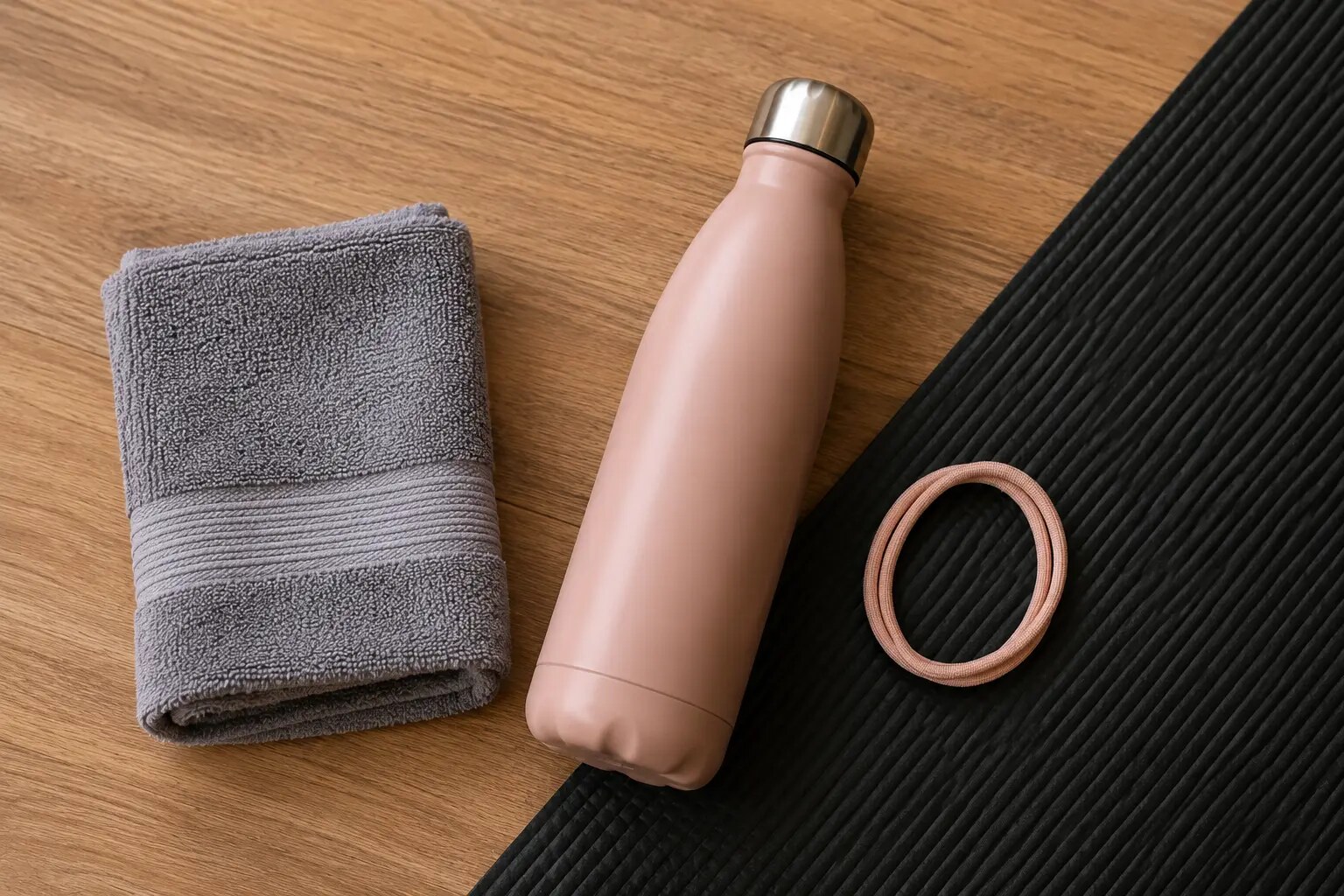
Pack these for your first (or next) lesson:
 Fitted shorts, above mid-thigh
- Sports bra or fitted top
- Clean socks for walking to and from the studio
- Small towel
- Water bottle
- Hair tie or headband
- Grip aid (not essential for lesson one, but useful from lesson two onward)
- A protein snack for afterwards – beginner pole classes are more tiring than they look
 Fitted shorts, above mid-thigh
What to Leave at Home
- Leggings or joggers – they block the skin contact you need to grip.
- Jewellery – rings, bracelets, hoop earrings, and belly button piercings can scratch the pole and catch during spins.
- Watches and smartwatches – the casing and strap can scratch the pole and catch during spins, just like other jewellery.
- Long necklaces – these swing during movement and can catch on the pole or your hands mid-move.
- Moisturiser or body oil – both make the pole slippery and are a pain to clean off.
- Hand cream – the same problem as moisturiser; apply it after class instead, not before.
- Long or sharp nails – not dangerous, but they can make certain grips uncomfortable and are more likely to break during class.
- Fake tan – extremely slippery on the pole and very difficult to clean off. Avoid on class days.
- Perfume or body spray on your hands and inner arms – anywhere that contacts the pole is better left product-free.
What About Sweaty Hands?
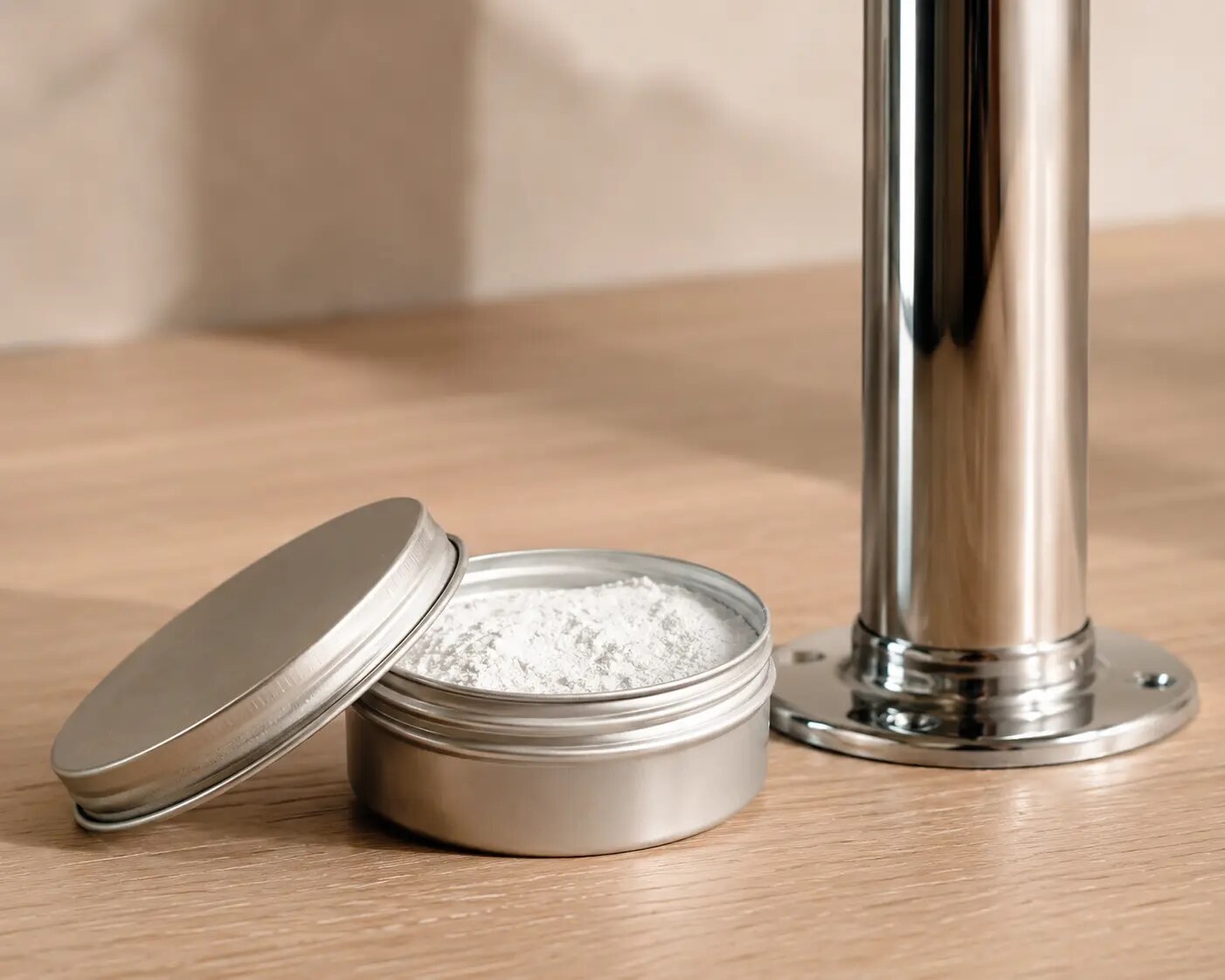
Sweaty palms are one of the most common complaints from new pole students, regardless of age or fitness level. Chalk-based products such as Mighty Grip powder (UK) / Mighty Grip powder (US) are popular with beginners, while stickier resin-based options like iTac2 suit people who struggle with dry skin rather than sweat. Most studios also sell or recommend a grip that works well with their specific poles, so it’s worth asking before you buy anything yourself.
Leg warmers are another handy (and completely optional) extra – pop them on during warm-up or while you are waiting your turn at the pole, then pull them down when it is time to grip.
A Note on Pole Finishes
Different studios use chrome, stainless steel, brass, silicone, or powder-coated poles. The finish affects how warm or cool the pole feels and can influence grip slightly. Regardless of the finish, exposed skin is still essential for most beginner grips – so the advice on shorts and bare arms applies across all pole types.
How to Wash Pole Clothes
- Wash shorts and tops after every class – sweat breaks down elastic fibres faster than normal everyday wear.
- Avoid fabric conditioner – it coats the fibres and can leave fabric slippery, which reduces grip.
- Air dry where possible – high-heat tumble drying shortens the lifespan of stretch fabrics.
- Replace shorts once the elastic loses compression – if they start sliding down mid-class, it’s time for a new pair rather than another wash.
Frequently Asked Questions
What should I wear to my first pole dancing class?
Fitted shorts above mid-thigh, a sports bra or fitted top, and bare feet. Skip moisturiser on the day, and remove jewellery before you start.
Can I wear leggings to pole dancing lessons?
It is best to avoid them. Leggings stop your skin from gripping the pole properly, which makes basic holds much harder than they need to be. Shorts are the better choice, even for a first lesson.
Do I need pole dancing heels to start lessons?
No. Most beginner classes are taught entirely barefoot. Heels are something to think about later on, once you have built up confidence with the basics.
Is pole dancing clothing different for men or older beginners?
Not really – the core kit (shorts, fitted top, bare feet) is the same for everyone, regardless of age or gender. Pole studios generally welcome a wide mix of students, and the grip requirements are identical whether you are a teenager or in your 60s. Several pole wear brands, including Dragonfly and Creatures of XIX, also offer dedicated men’s pole shorts if you’d rather not wear a unisex fit.
What if I am self-conscious about wearing shorts?
It is a very common feeling, and it tends to fade fast once class gets going – everyone is too busy concentrating on their own moves to be looking at anyone else’s outfit.
What should I wear to a pole fitness class?
The same advice applies to pole fitness as to pole dancing – shorts, a fitted top, and bare feet. Pole fitness classes use the same equipment and the same grips, so your clothing needs are identical.
What is the best fabric for pole dancing clothes?
Nylon, polyester and elastane blends with plenty of stretch are the standard choice for pole shorts and tops, since they move with you and hold their shape wash after wash. Avoid thick cotton, which gets heavy and loses grip when damp with sweat, and avoid slippery synthetic fabrics that can shift out of place mid-move.
Ready to Get Started?
Your first pole outfit doesn’t need to be expensive. Comfortable shorts, a supportive top and bare feet are enough for almost every beginner class. Once you’ve decided pole is for you, you can gradually invest in specialist pole shorts, a grip aid, and, eventually, a pair of pole heels – our guide to the best pole dancing shoes for beginners is a good place to start when you’re ready for that next step.