
You have just spent good money on a new pair of platform heels for pole dancing – whether it is Pleaser, Ellie, or Hella Heels – and the last thing you want is to scuff them up in the first week. Whether you are doing floor work, spinning, or just walking to the studio, the platform and toe area take a beating.
The good news is that protecting, cleaning and repairing your pole dancing shoes does not have to cost much. This guide covers five ways to stop damage before it happens, how to clean up scuffs and marks once they appear, and how to fix the two most common repairs – a broken ankle strap and a scuffed sole – so you can pick what suits your budget and skill level.
5 ways to protect your pole dancing shoes
The methods below are listed roughly in order of simplicity. Our personal favourite is Method 2, the lycra tube, but the sock method is hard to beat when you need something fast.
Method 1: Use a pair of socks (quickest and cheapest)
This is the easiest method and costs nothing if you already own a pair of ankle socks. It is also the best option for protecting shoes while they are in storage or if you forget your proper protectors.
- Take a pair of short ankle socks.
- Pull one sock over each shoe, covering the platform and sides.
- Cut the toe out of each sock so you can walk on the sole without slipping.
- Fold the top of the sock down so it sits just above the edge of the shoe and does not interfere with your toes.
The main limitation is that socks are not very durable and will look a bit rough. They are best for storage and casual use rather than performance. Browse ankle socks on Amazon UK or Amazon US.
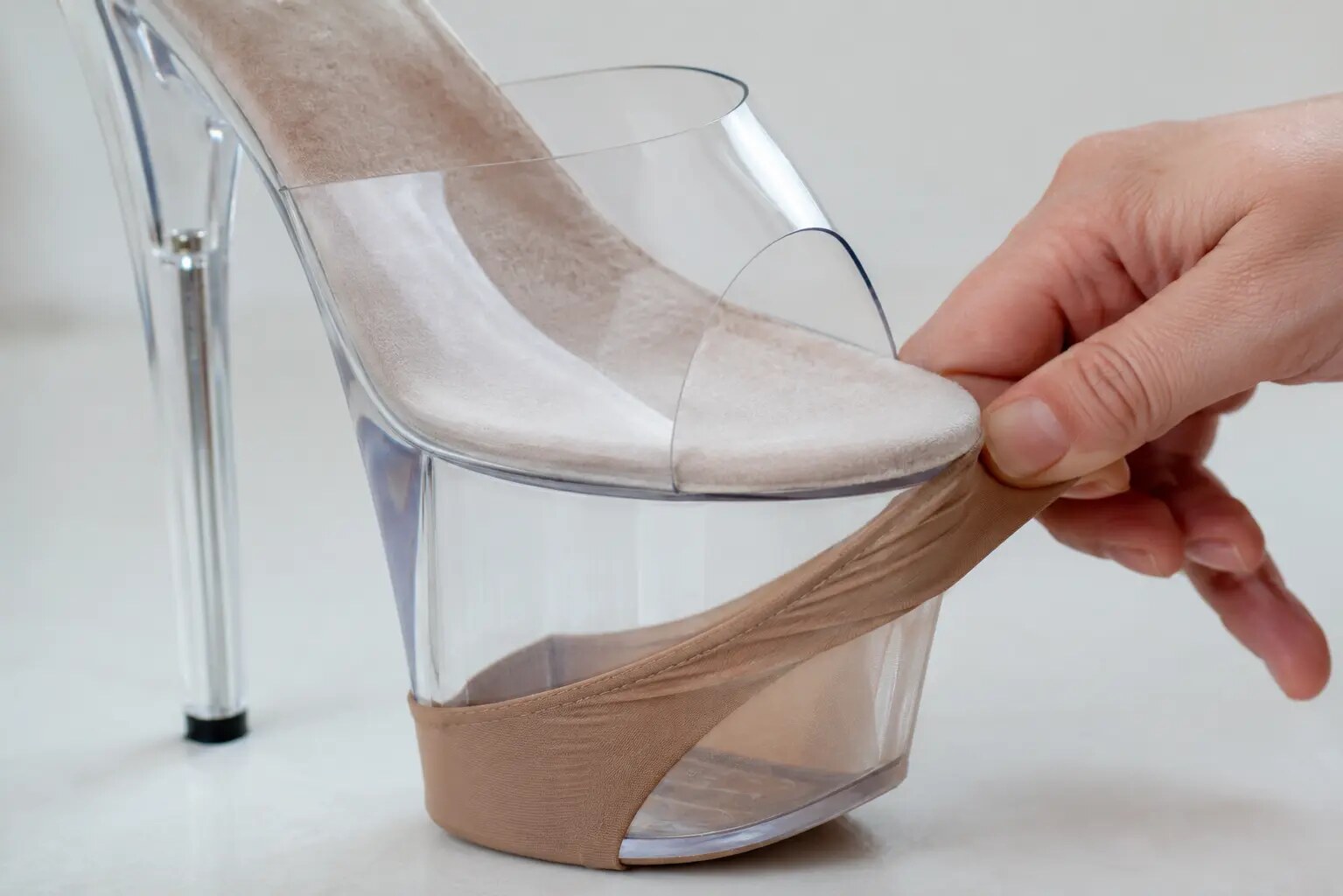
Method 2: Sewn lycra tube protectors (our favourite)
This method gives you a neat, fitted sleeve that slips over the platform of your shoes. It looks much tidier than socks and you can make them in any colour or print to match your costume. You need basic sewing skills and a small piece of lycra or scuba fabric.
- Measure the circumference of the platform at its widest point and the length of the platform.
- Cut a rectangle of lycra fabric slightly smaller than the circumference measurement (lycra stretches, so a snug cut is better).
- Sew the short edges together to form a tube, wrong sides facing out.
- Turn the tube right side out and pull it over the platform of your shoe.
Once you have the hang of it you can make several pairs in different colours and patterns. Lycra and scuba fabric are inexpensive and widely available. Browse lycra fabric on Amazon UK or Amazon US.
Method 3: Lycra and vinyl protectors (most durable DIY option)
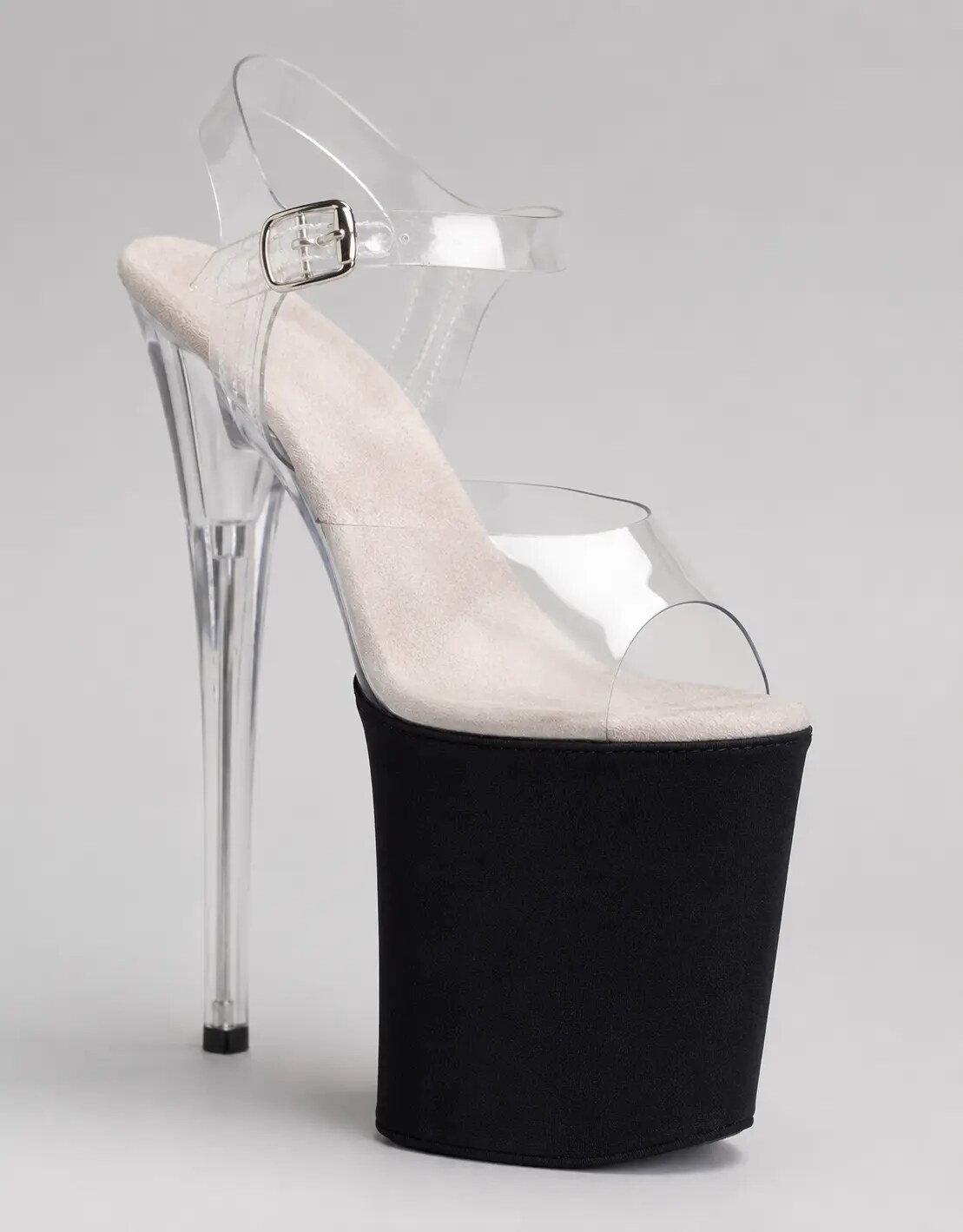
This method adds a layer of sturdy vinyl to the underside of your lycra sleeve, which makes the protector more hard-wearing. You need lycra fabric, wide elastic, and clear or coloured vinyl. It takes more time to make but the result lasts longer than a plain lycra tube.
The basic construction is the same as the lycra tube above, but with a vinyl panel sewn onto the contact areas for extra protection. This is a good option if you do a lot of floor work or if your floor surface is rough.
Supplies you need: lycra or scuba fabric, clear or coloured vinyl, and wide elastic. All are available from craft and fabric shops or online.
Method 4: Kinesiology tape
Kinesiology tape is a quick way to protect specific areas of a shoe without any sewing. Cut strips to size and apply them over the parts that get scuffed, usually the toe box and the sides of the platform.
Tape comes in a wide range of colours so you can use it as a decorative touch as well as protection. The main downside is that when you remove it, it can leave adhesive residue on the shoe surface. Use this method for shoes you do not mind getting a little sticky, or as a very short-term fix. Browse kinesiology tape on Amazon UK or Amazon US.
Method 5: Buy ready-made pole shoe protectors
If you would rather not make your own, there are plenty of ready-made platform protectors available online. These are pre-sewn lycra or fabric sleeves designed specifically for pole dancing shoes, so the fit and finish are usually better than DIY versions.
They are available in a huge range of colours and prints, and many sellers offer custom sizing. Search for “pole dancing shoe protectors” or “Pleaser shoe covers” on Etsy or Amazon to see what is available.
Browse pole shoe protectors on Amazon UK or Amazon US.
How to Clean Scuffs and Marks Off Your Shoes
Protecting your shoes cuts down on damage, but even the most careful dancer will end up with a scuffed sole or a dirty footbed eventually. These fixes take a few minutes and use things you probably already have at home.
Cleaning the Sole and Platform
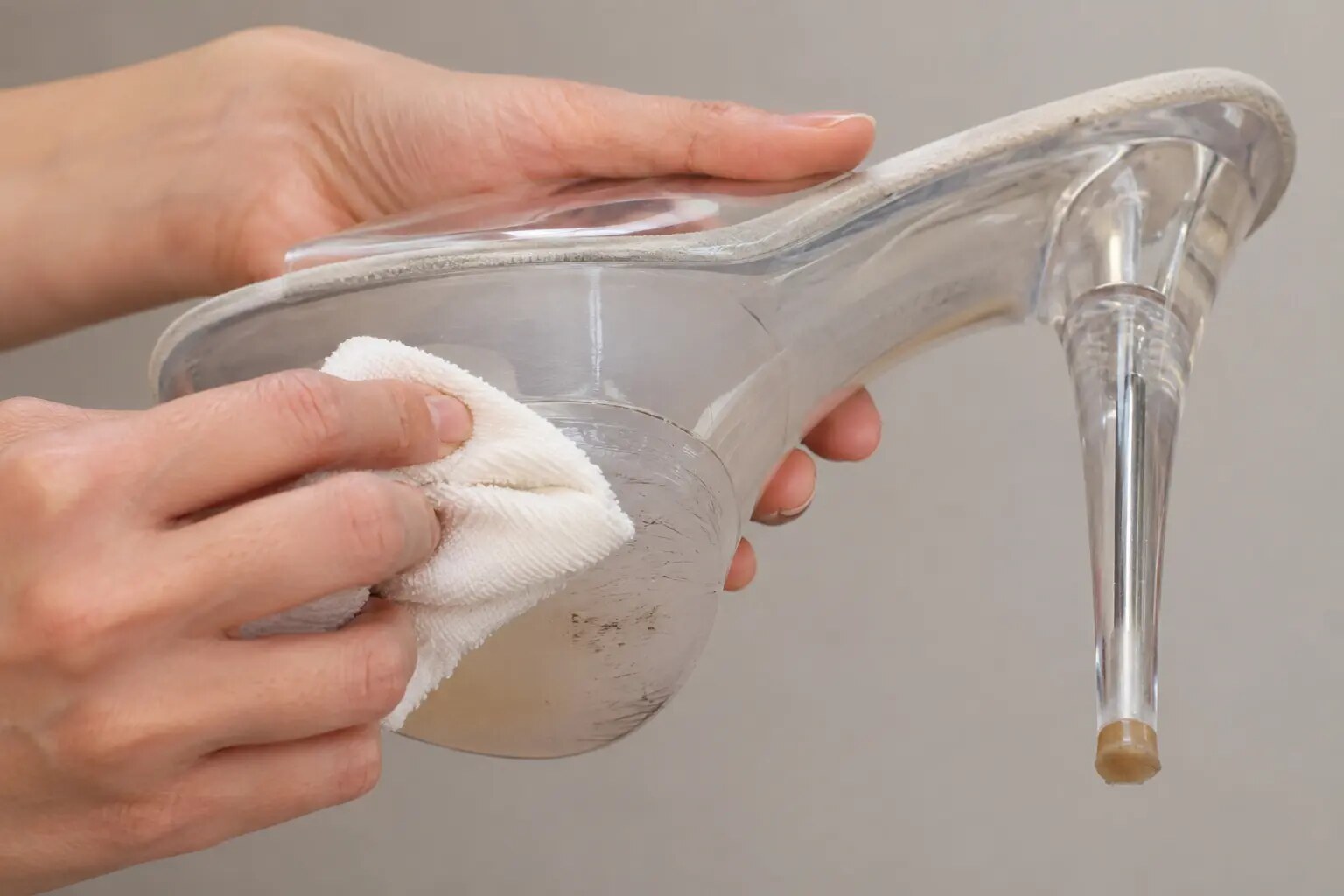
For everyday black marks and grime on the sole, wipe it down with a baby wipe, a damp cloth, or a small amount of rubbing alcohol (the same kind many dancers use to clean the pole itself). Work in small circles and dry with a clean cloth afterwards.
Cleaning a Light-Coloured Footbed
Clear and light-coloured footbeds show dirt fast. A wet wipe or a small amount of mild detergent on a damp cloth will lift most marks. For built-up grime in the texture of the footbed, go over it gently with a soft-bristle brush or an old toothbrush, then wipe away any residue.
Touching Up Scuffs on Black Shoes
If a black patent or matte shoe picks up a light-coloured scuff, a black Sharpie in a matching finish is a genuinely effective quick fix. Colour over the mark, let it dry for a minute, then buff gently with a soft cloth. It will not fix deep gouges, but it hides light surface scuffs well enough that most people will not notice.
Caring for Leather Pole Shoes
Leather and faux-leather styles benefit from an occasional wipe with a proper leather conditioner, which helps stop the material cracking or losing its flexibility over time. Apply sparingly with a soft cloth and let it absorb fully before wearing the shoes again.
How to Fix a Broken Ankle Strap
A snapped or torn ankle strap is one of the most common repairs pole dancers face, and in most cases it is an easy, cheap fix rather than a reason to replace the whole shoe.
Swap in a Replacement Strap
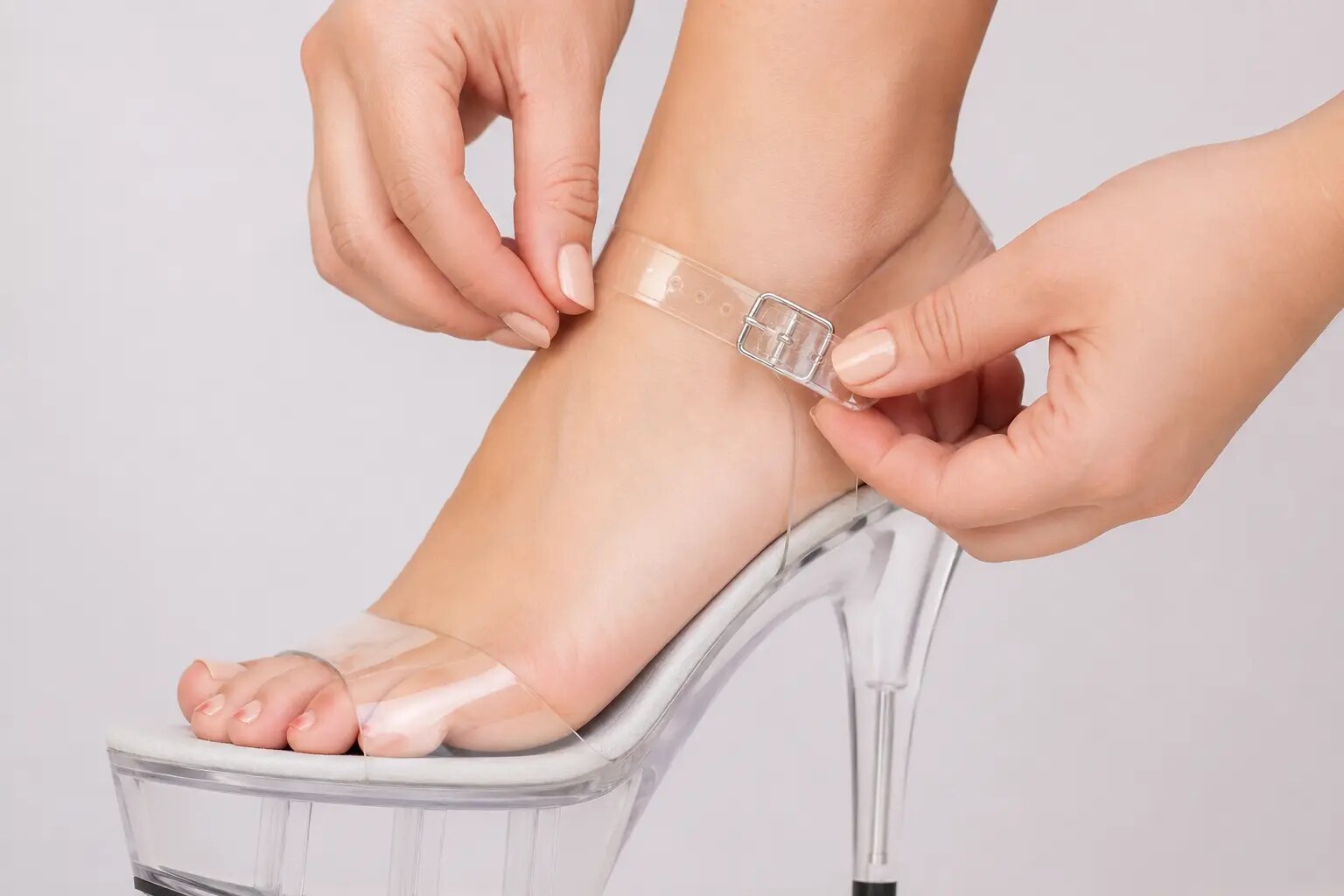
Many Pleaser styles use a detachable ankle strap, and replacement straps are sold separately for around £10-£12 ($12-$15). Unclip or unscrew the old strap, fit the new one in the same way, and you are ready to dance again. This is the neatest fix if your style supports detachable straps. Ellie and Hella Heels platforms do not always use the same detachable system, so check the fitting on your specific pair before you buy a replacement.
Repair a Torn Strap with Adhesive
If the strap itself has torn rather than come away from its fitting, a strong flexible adhesive such as E6000 or a similar shoe-safe glue will usually hold. Apply a thin, even layer to both surfaces, press them together firmly, and clamp or tape the join while it cures fully before wearing the shoes again – rushing this step is the most common reason a glued repair fails.
When to Take Them to a Cobbler
For structural damage – a strap that has torn away from the sole, a snapped heel, or anything affecting how the shoe sits on your foot – a local cobbler is worth the trip. Most repairs cost far less than a new pair of shoes, and a professional fix will hold up better under the stress of floor work and spins.
Emergency Fix Mid-Class
If a strap gives way in the middle of a class or shoot and you need a temporary fix to get through the session, a hair tie looped through the strap fittings or a strip of tape around the ankle will usually hold long enough to finish up. Treat it as a stopgap and make a proper repair once you are home.
Everyday Habits That Extend the Life of Your Shoes
A few small habits make a bigger difference to how long your shoes last than any single product.
- Use a shoehorn when taking your shoes off. Using one shoe to push the other off is one of the most common ways the heel back gets crushed or scuffed.
- Avoid wearing the same pair two days in a row where possible. Letting the foam insole and materials fully recover between wears helps them keep their shape for longer.
- Store shoes properly between sessions rather than leaving them in a bag. Our full guide to storing pole dancing shoes covers the best way to keep them in shape long-term.
Frequently asked questions
Do I need to protect my pole dancing shoes?
You do not have to, but platform heels can get scuffed quickly, particularly during floor work. This applies across brands – Pleaser, Ellie and Hella Heels all use the same platform-and-heel construction, so they scuff in the same way. If you have paid a lot for your shoes, a pair of fabric protectors is a small investment that can significantly extend how good they look.
What part of the shoe needs the most protection?
The platform sole and the toe box take the most impact during floor routines. The sides of the upper can also get scuffed if you work on a rough floor surface. A lycra sleeve protects the platform; tape or vinyl can cover the toe area.
Can I wash lycra pole shoe protectors?
Yes. Hand wash them in cool water with a gentle detergent and leave them to air dry. Do not tumble dry as this can cause the lycra to shrink or lose its stretch.
Will kinesiology tape damage my Pleasers?
It can leave a sticky residue when removed, particularly on patent or PVC surfaces. If you want to keep your shoes in pristine condition, stick to fabric protectors rather than adhesive tape.
How do I store pole dancing shoes to protect them?
Pull a pair of ankle socks over the platforms before putting them in a shoe bag or box. This stops the heels and platforms from scratching each other in storage.
How do I clean the soles of my pole dancing shoes?
Wipe them with a baby wipe, a damp cloth, or a little rubbing alcohol, working in small circles and drying afterwards with a clean cloth. This handles most everyday scuffs and marks.
Can I use a Sharpie to fix scuffs on my Pleasers?
Yes, on black patent or matte styles a matching Sharpie is a well-known quick fix for light surface scuffs. Colour over the mark, let it dry, and buff gently. It will not disguise deep gouges or chips.
How do I fix a broken ankle strap on my Pleasers?
If your shoes use a detachable strap, buy a replacement and swap it in directly. If the strap material itself has torn, a shoe-safe adhesive such as E6000 will usually repair it. For structural damage, a local cobbler is the safest option.
Should I wear the same pair of pole shoes every day?
It is better not to. Giving shoes a day to air out and let the insole foam recover helps them keep their shape and last longer, especially if you train often.
Buy Ready-Made Protectors
If you’d rather buy a pair than fit your own, see our full roundup of the best platform shoe protectors for reviews and where to buy them.